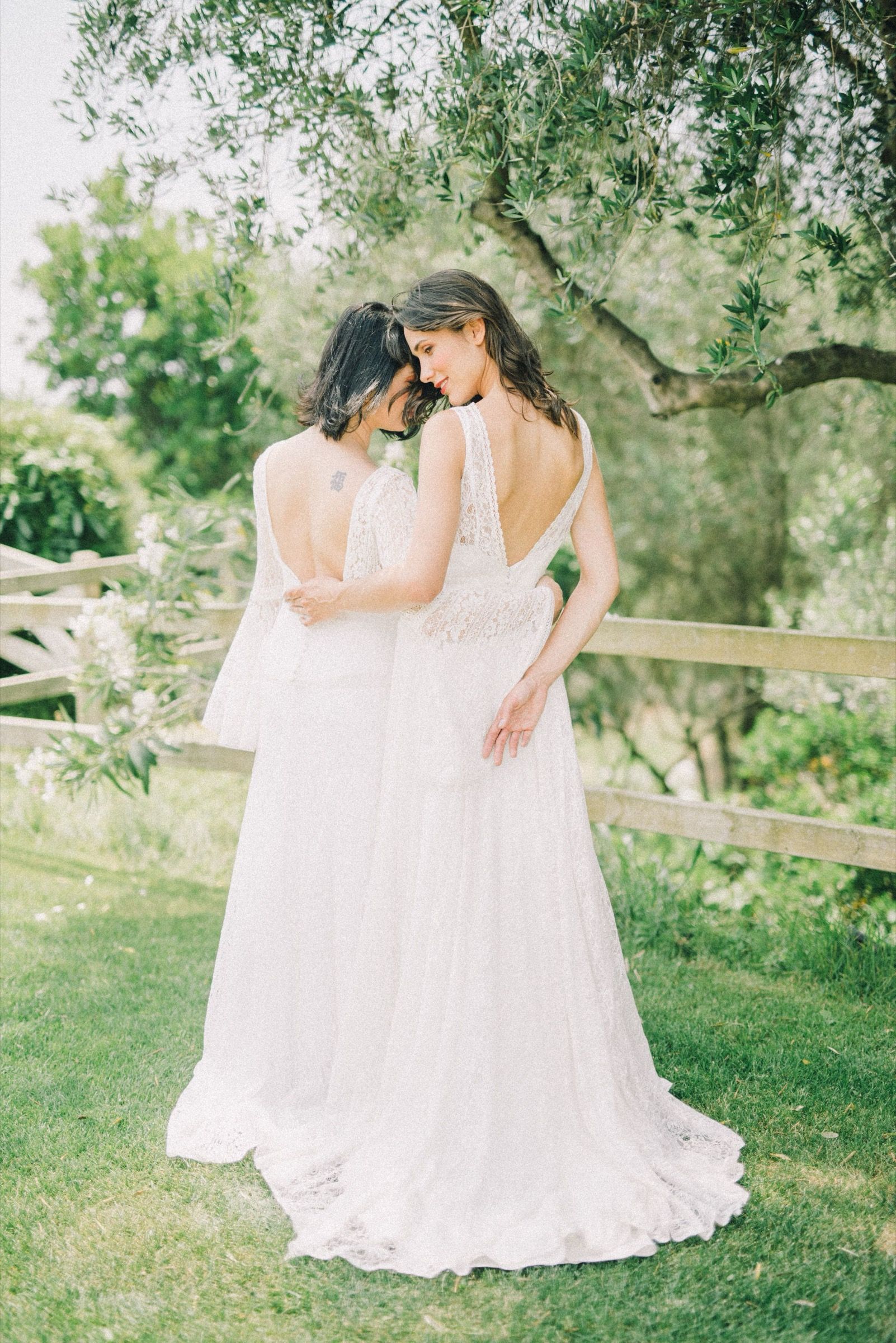
A micro wedding (roughly a few dozen guests or fewer) or an elopement can be one of the easiest ways to get married in wine country, but the savings are not automatic. Many venues price by the date, not the head count, and minimums do not shrink because your list did. Ask whether a venue has a specific small-wedding offer, and remember that a license and a qualified officiant are still required.
What changes with a small guest list
| Area | What tends to change | What stays the same |
|---|---|---|
| Venue | More options: private dining rooms, terraces, tasting-room spaces | Site fees and minimums may still apply |
| Date | Weekdays and off-season dates may be easier to book | Peak Saturdays are still in demand |
| Catering | Plated or family-style meals become practical | Service charges and tax still apply |
| Bar | Venue wine is still often required | Last call and end times still apply |
| Paperwork | Nothing | License, officiant and witnesses are still required |
Venue offers for small weddings
Some venues publish a separate small-wedding option. For example, one Sonoma winery publishes micro weddings for 20 to 40 guests, priced on inquiry, alongside its full wedding offer. Other venues may only take full weddings, or may host small groups as a private tasting or private dinner instead.
Ask:
- Do you have a micro-wedding or elopement offer? What is it called in the contract?
- What is the minimum guest count, and the minimum spend?
- Which spaces and hours are included? Is the property closed to the public during our time?
- Are the same vendor rules in place (required caterer, required coordinator, venue wine)?
- Can we hold the ceremony and dinner in the same place?
- Are weekday or off-season dates priced differently?
If a venue applies a minimum guest count, contract guides note that you pay for that count even if fewer people come. Know the number before you sign.
A private room instead of a venue
For very small groups, a restaurant private dining room or a winery that hosts private groups can work for the meal, with the ceremony somewhere else. That might mean a short ceremony at the clerk’s office, a ceremony at your lodging if it allows it, or a ceremony at a venue that rents a ceremony site on its own. For example, one Traverse City area venue publishes a separate fee for its ceremony site.
Ask the restaurant or winery whether it hosts private events, what the minimum is, and whether a toast or short speech is fine.
Civil ceremonies at the county clerk’s office
Both counties we cover in detail describe clerk ceremonies (checked 2026-11-11).
Sonoma County. The Clerk-Recorder’s office offers civil ceremonies by appointment, in an outdoor garden (weather permitting) or an indoor room, for the couple plus up to 17 guests. The listed fee was $60.00. You schedule through the online license application. The page says decorations, items to throw, food and drinks are not allowed, and that members of the public may be present in the outdoor garden.
Grand Traverse County. The Clerk offers short civil ceremonies by appointment, Monday through Thursday, only for couples whose license was issued by that office. Attendance is limited to the couple and their two required witnesses. Listed fees were $20 for county residents and $30 for out-of-state applicants, and availability is not guaranteed.
See our marriage license guide for license rules, waiting periods and officiants.
Eloping at a vineyard
Vineyards are private, working farms. Before you plan a ceremony or photo session among the vines:
- Get permission from the property owner or venue, in writing.
- Ask about times, areas and any fee.
- Ask whether harvest or farm work will be happening.
- If your photographer wants to fly a drone, ask the venue first. See our drone guide.
Do not assume a public tasting-room visit includes permission for a ceremony or a professional shoot.
Guests who still want to celebrate
A small ceremony does not have to leave out the wider circle. Common approaches:
- A welcome drink or casual dinner the night before for a slightly larger group
- A later reception at home, after the wine-country trip
- A video call during the ceremony, if the venue’s connection allows it (ask)
- A shared photo album or short film afterward
If you plan a second event, decide which one has the formal invitation, and keep the guest lists clear so no one feels left out by accident.
Budget tips that actually work
- Choose a weekday or shoulder-season date if the venue prices them lower.
- Ask for a small-wedding package rather than a scaled-down full wedding.
- Consider a clerk ceremony plus a private dinner.
- Put the money into one thing you will remember (the meal, the photographer, the wine).
Use our cost worksheet to compare a micro-wedding offer with a private dinner plan, including service charges and tax.
Questions to ask
- What is the minimum guest count and minimum spend for our date?
- What is included, and for how many hours?
- Is the space private for our group?
- Do your vendor and beverage rules still apply?
- Can we bring our own officiant and photographer?
- What is the cancellation policy for a small event?
Track the answers in the Before You Sign checklist. For license questions, the county clerk is the source; for property permission, the venue.
Questions
Do wineries host micro weddings?
Some do, and some publish a separate offer. For example, one Sonoma winery publishes micro weddings for 20 to 40 guests, priced on inquiry. Others only take full weddings, or only host small groups as private tastings. Ask what the event is called in their contract and what it includes.
Can we just elope at a vineyard without telling anyone?
You still need permission from the property, a valid license and a qualified officiant. Do not hold a ceremony or photo session on private vineyard land without the owner's approval.
What is the simplest legal option?
A civil ceremony at the county clerk's office. Sonoma County and Grand Traverse County both describe clerk ceremonies by appointment, with limits on guests. Then celebrate afterward at a restaurant or winery that hosts private groups.
Sources
- Weddings, Russian River Vineyards
- Marriage Ceremonies (Sonoma County Clerk-Recorder-Assessor)
- Marriage License (Sonoma County Clerk-Recorder-Assessor)
- Civil Wedding Ceremonies (Grand Traverse County Clerk)
- Marriage Licenses (Grand Traverse County Clerk)
- Weddings, Jacob's Farm
- Basic information needed on your wedding venue contracts (Markel)
Last reviewed November 2026. General information, not legal, financial or safety advice. Businesses mentioned are independent of Vineyard Bridal; confirm details, availability and terms directly with them. Editorial standards