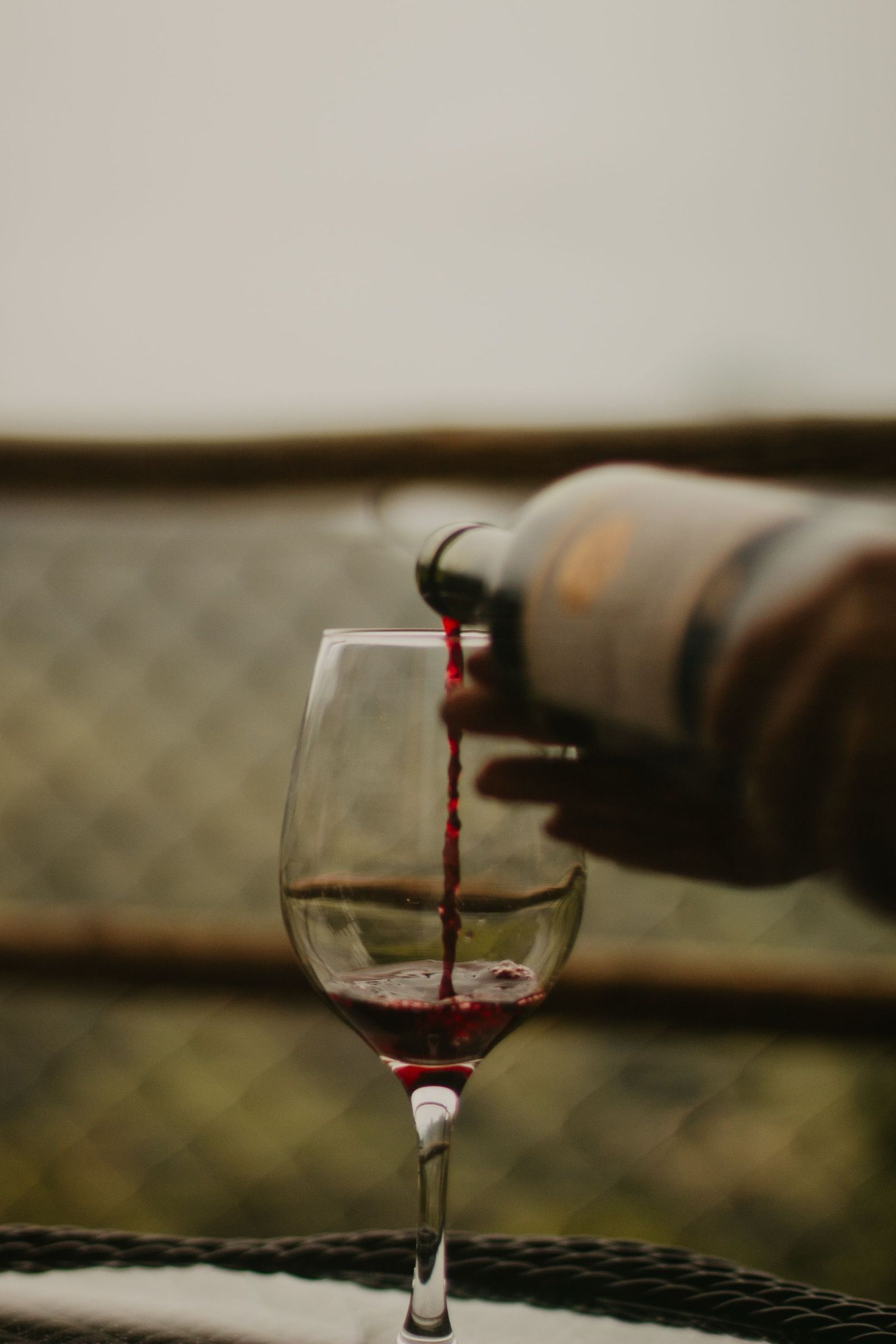
Usually not, and you should plan as if the answer is no until the venue says otherwise in writing. Most wineries that host weddings require you to serve their own wine, and many do not allow outside alcohol at all. A few will consider an exception for a particular bottle. If you get one, it belongs in the signed contract.
Why wineries require their own wine
There are two reasons, and both are reasonable.
It is their business. A winery wedding is partly a way to pour and sell the winery’s wine. Beverage minimums are common. For example, one Sonoma winery publishes that wine and beer must be bought through the winery, that spirits are not permitted, and that a beverage minimum applies.
It is their license. Alcohol service at a venue happens under the venue’s (or caterer’s) licenses and permits, and those come with conditions. The same Sonoma winery says outside alcohol is not allowed because of its licensing. A venue cannot agree to something its license does not allow, no matter what you offer to pay.
Corkage is a fee, not permission
Corkage is a charge some venues make for opening and serving a bottle you bring. It is common at restaurants, and some event venues offer it. At a winery wedding:
- A published corkage fee for restaurant dining does not mean corkage applies to private events.
- A corkage fee does not make outside alcohol allowed where the venue’s license or rules do not allow it.
- Even where corkage is offered, there may be a bottle limit, a rule that the venue’s staff pour it, or a rule that it cannot replace the beverage minimum.
Contract guides from both insurers and wedding publications list corkage among the fees that should be disclosed up front. If it is not in the fee schedule, ask.
The general state context
These are general summaries of what the state alcohol agencies publish. They are not legal advice, and they do not tell you what a particular venue may allow. The venue (and its licensed caterer or bar service) is responsible for its own compliance.
California
The California Department of Alcoholic Beverage Control (ABC) says:
- It does not issue a bartender’s or mobile bartending license. Unlicensed bartenders may work parties, but the host may pay them only for bartending, not for alcohol sales.
- Hired bartenders cannot act like licensed caterers. The ABC says they cannot bring alcohol and charge by the glass, cannot buy alcohol for the host and be reimbursed, and cannot take a prepaid order and deliver it. The host buys all the alcohol in advance.
- There is no license type specific to banquet halls or event spaces. A space without an appropriate license cannot sell alcohol but can be used by authorized vendors, such as licensees with a caterer’s permit, which must get ABC authorization for each catered event.
What this means for you: if you want to bring wine somewhere, the question is not just “is there corkage?” but “is outside alcohol allowed here at all, and who will pour it?”
Michigan
The Michigan Liquor Control Commission (MLCC) says:
- No liquor license is required for private events such as wedding receptions, subject to conditions: no one under 21 drinks, the event is invitation-only and not open to the public, guests are not charged to attend, and guests do not pay for alcohol. Guests may bring their own alcohol, or the host may buy it from a licensed retailer.
- A licensed business with an MLCC catering permit may serve at a private event off its premises, with conditions, including that the host pays the licensee in advance and that the licensee’s servers have completed approved server training.
- Mobile bar and bartending services are not licensed in Michigan. They may charge for service, supplies and non-alcoholic items, but must not provide or sell the alcohol. They serve only what the host bought from an appropriately licensed retailer.
What this means for you: those private-event rules describe when a state license is needed. They do not override a venue’s own rules. A winery or licensed venue can still require its own wine and refuse outside alcohol.
How to ask for an exception
If a particular bottle matters to you (a family wine, a vintage from your birth year, a sparkling wine you love), ask early.
- Ask before signing. Exceptions are easier to negotiate before the deposit.
- Be specific: which bottle, how many, when it will be poured (toast only, head table only).
- Ask about corkage, whether the bottles count toward any beverage minimum, and who pours.
- Ask whether the venue’s license and policies allow it. Let the venue answer that.
- Get the exception in the signed contract or a written addendum signed by someone authorized to bind the venue.
A friendly “we can probably make that work” on a tour is not enough. If the staff member moves on, you have nothing to point to.
Questions to ask
- Must all wine and beer be bought from you? From your full portfolio or a set wedding list?
- Are spirits allowed? Cocktails? A signature drink?
- Is outside alcohol allowed in any form? If yes, what is the corkage fee and bottle limit?
- Do outside bottles count toward the beverage minimum?
- Who staffs the bar? When is last call?
- What non-alcoholic options are included?
- What happens to opened and unopened bottles at the end of the night?
If wine is flexible for you
If you want to choose every bottle yourself, a winery may not be the right reception site. Consider a venue that allows a licensed caterer or, where the venue and state rules allow it, a host-supplied bar. Compare the options in our mobile bartender vs venue bar guide. Many couples hold a winery tasting or rehearsal dinner instead, and keep the reception elsewhere.
For the full list of questions, see What to Ask Before Booking a Winery. For anything about what your venue’s license allows, ask the venue; for state rules, ask the ABC or MLCC directly.
Questions
Can we bring one special bottle for a toast?
Ask before you sign. Some venues allow a small exception, some never do. If the venue agrees, get the bottle count, any corkage fee and who will pour it written into the contract or a signed addendum.
If we pay corkage, is it automatically legal?
No. A corkage fee is a venue's business charge. Whether outside alcohol can be served at all depends on the venue's licenses and permits and on state rules, which the venue is responsible for knowing. Ask the venue to confirm it can allow your request.
Can our mobile bartender bring the wine?
In both California and Michigan, the state alcohol agencies say an unlicensed bartending service for a private party cannot supply or sell the alcohol; the host buys it. At a winery venue, the venue's own rules and licenses usually decide whether outside alcohol is allowed in the first place.
Sources
- Weddings, Russian River Vineyards
- Licensing Frequently Asked Questions (California ABC)
- Private Events, Mobile Bars and Mobile Bartending Services, Food Trucks (Michigan Liquor Control Commission)
- Basic information needed on your wedding venue contracts (Markel)
- Wedding Venue Contracts 101 (Here Comes the Guide)
Last reviewed November 2026. General information, not legal, financial or safety advice. Businesses mentioned are independent of Vineyard Bridal; confirm details, availability and terms directly with them. Editorial standards